Chunk Stack
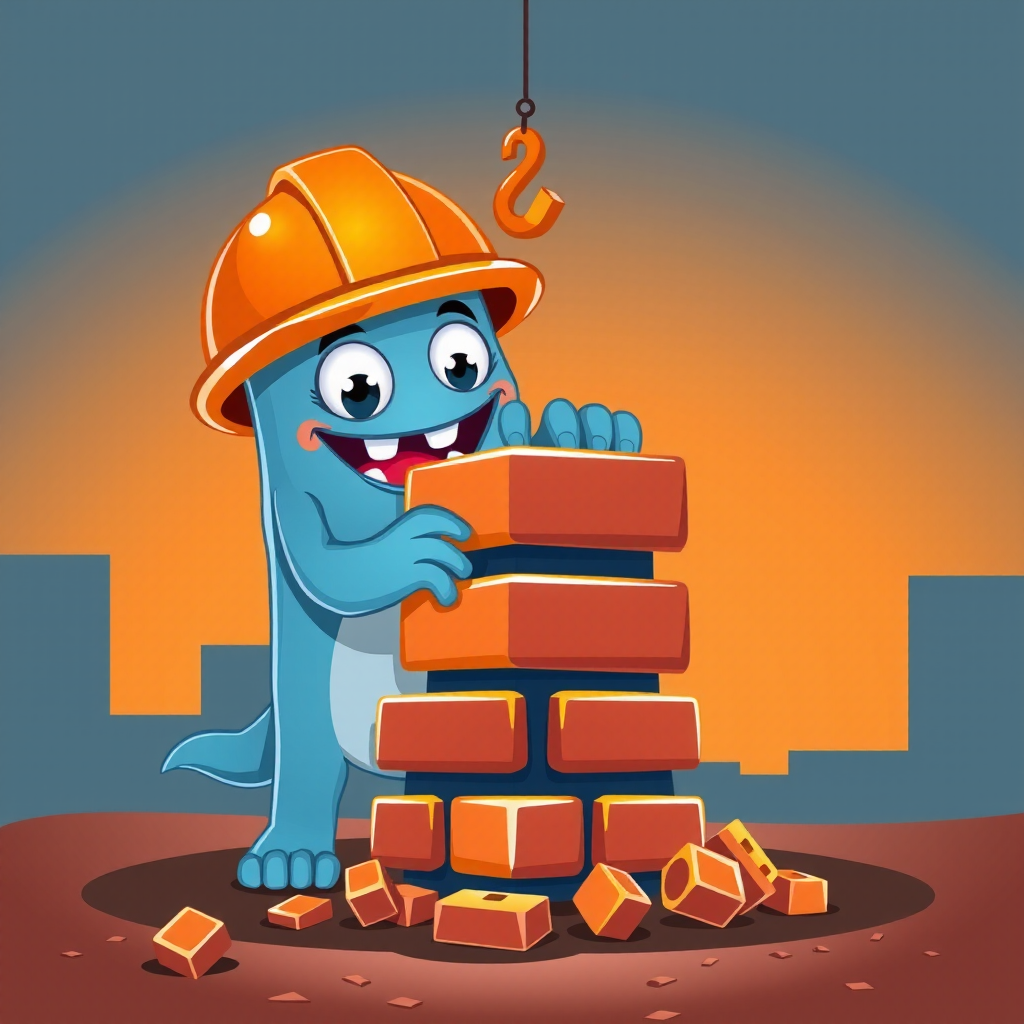
A crane lowers word chunks one at a time. Keep UN, then LOCK, then ED, and you have built unlocked. Toss the bricks that don't fit, or the rubble piles up.
Play Chunk Stack — FreeFree · No sign-up · Ages 7+ · No ads
How Chunk Stack Works
Hear the word, count the slots
The word is spoken and the ticket shows one slot per chunk — three slots for UN · BREAK · ABLE. Younger players can see the pieces; older players listen and work out which ones.
Keep what fits, toss the rest
A crane lowers one brick at a time. If it is the next piece of the word, tap Keep and it flies into its slot. If it is not, tap Toss — a good catch scores points. The piece you need is always on the crane or in the next-three preview.
Keep the rubble below the tape
A wrong brick that lands becomes rubble. If the heap reaches the caution tape, the round ends. Build a word with no mistakes and the whole pile is cleared. Finish six words and the house is built.
Why Word Parts Beat Word Lists
A child who memorises words has to learn every word once. A child who sees the parts learns a few dozen pieces and can then spell thousands of words they have never been taught.
One root, a family of words
Port means carry. Once that lands, import, export, transport, portable and transportation stop being five spellings and become one root with five jackets on. Chunk Stack keeps returning to the same roots so the family becomes visible.
The near-miss pairs are the whole point
The decoy pieces are never random. They are the ones children actually confuse: -able against -ible, -ant against -ent, -tion against -sion, in- against im-. Picking between them is the decision that separates a speller from a memoriser.
Spelling changes shown, not recited
From level three the word transforms as the piece lands — the silent e slides out of HOPE + ING, the n doubles in RUN + ING — and a one-line card names the rule. It never blocks play, and the links to the full rule wait until the round is over.
A wrong answer costs a block, not the game
There is no beat and no hit window, and bricks sink slowly enough to read. Keep and Toss both answer the instant they are tapped. The only pressure comes from the rubble a child’s own wrong answers leave behind, which is pressure they control — and a perfect word clears it all.
The Three Rules Chunk Stack Teaches
Every spelling change in the game comes from one of these. Each has a full page of examples and exceptions.
The silent e rule
HOPE + ING drops the e: hoping. The e has done its job once another vowel arrives.
Doubling the final consonant
RUN + ING doubles the n: running. The extra letter keeps the vowel short.
Adding -ed and -ing
STOP + ED becomes stopped. The same two endings, and everything that happens to a word before them.
Frequently Asked Questions
What are prefixes, roots and suffixes?
Most long English words are built out of smaller parts. The root carries the meaning — lock, port, break. A prefix goes in front and changes that meaning: un- reverses it (unlock), re- repeats it (replay), pre- puts it first (preheat). A suffix goes on the end and usually changes the word's job in a sentence: -ing and -ed make a verb into a tense, -ful and -less turn a noun into a describing word, -tion turns a verb into a thing. Once a child can see those parts, a word like unbreakable stops being eleven letters to memorise and becomes three pieces they already know.
Why does the spelling change when you add -ing?
Because English protects the sound of the vowel in the root. Hope has a long o, held there by the silent e — and since -ing already starts with a vowel, the e is no longer needed and is dropped: hoping. Run has a short u, protected by a single consonant closing the syllable — so the n is doubled to keep it short: running. Without the doubling you would read runing with a long u. Chunk Stack shows the change happening on the word ticket, names the rule in one line, and links to the full explanation at the end of the round.
How is Chunk Stack different from other falling-block word games?
The falling piece is a whole chunk — two to five letters — not a single letter, and there is no music, no beat and no timing window. Nothing is ever judged on how fast you tap. The only question is whether the brick on the crane is the next part of the word, and the only pressure is the rubble your wrong answers leave behind.
What do Keep and Toss mean?
Every brick the crane lowers is either the next piece of the word or it is not. If it is, tap Keep and it joins the word. If it is not, tap Toss and it is thrown away for free — and that counts as a good catch. A wrong brick you keep, or leave to land by itself, becomes rubble; so does a right brick you toss by mistake. The game always sends the piece you need within the next three, so you never have to take a wrong brick. You only have to recognise it.
What age is this game for?
Roughly ages 7 and up. The Starter band uses only un-, re-, -ing, -ed and -s and never changes a spelling at the join. Builder adds -ful, -less, -ly, -ness, pre- and mis-. Master adds -tion, -able, -ible, -ment and Latin roots like port, ject and spect, where the near-miss pieces are the classic traps: -able against -ible, -ant against -ent.
Is Chunk Stack free?
Yes. Three rounds a day with no account at all. A free account gives unlimited rounds and earns XP and streaks toward your child's dashboard.
More spelling games for ages 7+
If Chunk Stack is a hit, these three suit the same ages. All free, all in the browser.